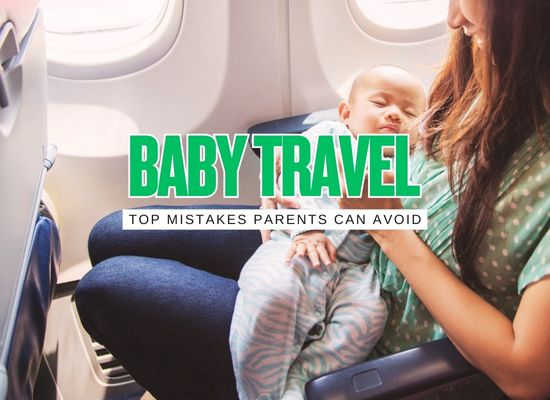
Traveling with a baby is not “hard,” it’s just a different sport. Most rough trips come from a handful of predictable mistakes like stacking too many transitions, underestimating feeding and diaper timing, or assuming you can improvise once you’re already tired. This guide is built to help you sidestep the common traps and keep the trip calm, realistic, and enjoyable.
The “calm trip” mindset (in one sentence)
With a baby, the goal is not “see everything,” it is “stack fewer transitions, protect sleep and feeding, and build extra time like it is part of the itinerary.”
The 3 things that prevent most meltdowns
- One predictable feeding plan (even if it changes).
- One predictable sleep plan (even if it is shorter).
- More buffer time than feels necessary.
What “buffer time” really means
- Extra time for diaper changes, blowouts, and feeding stops.
- Extra time for getting baby in and out of gear.
- Extra time for the one surprise you did not plan for.
Safety note (quick and important)
For car seats, sleep setups, and medicine dosing, follow your product manuals, pediatrician guidance, and local laws. This guide stays general on purpose.
Quick calculator: How much extra time should we add?
This gives a realistic “buffer” recommendation for airport days or road travel days based on baby age and your feeding plan.
Top 20 mistakes when traveling with a baby (and the fixes)
Each item below includes what the mistake looks like, why it happens, and a parent-tested way to prevent it.
1️⃣
Planning a “normal” itinerary like you do without a baby
A baby day has built-in fixed events: feedings, diaper changes, naps, and soothing time. If your schedule does not make space for those, the day becomes a chain reaction.
Fix that actually works
- Pick one main outing per half-day, not per hour.
- Plan “soft goals” instead of hard reservations back-to-back.
- Build a predictable return-to-base window for naps.
2️⃣
Booking the earliest flight because “baby will sleep”
Sometimes it works. Often it does not, especially if you have to wake the baby, rush through a dark house, and start the day stressed. A tired parent is a bigger trip risk than a later takeoff.
Better approach
- Choose a flight time that matches your household’s calmest morning rhythm.
- If you do early, build extra time for feeding and a calm diaper change before leaving.
- Protect your own sleep the night before.
3️⃣
Trying to “push through” a missed nap
Adults can power through with caffeine. Babies usually cannot. A missed nap often shows up as crying, feeding refusal, or waking constantly overnight.
Fix that keeps the day salvageable
- Protect at least one nap (usually midday) like it is a reservation.
- If a nap is late, shorten your next outing instead of forcing the same plan.
- Use stroller or carrier naps as a backup, but keep walking calm and steady.
4️⃣
Underpacking the diaper bag “to travel light”
“Light” turns into “panic” when there is a blowout, a surprise delay, or the baby suddenly wants more feeds than usual.
The travel-light version that still works
- Pack a tiny “emergency kit” inside the bag: diaper, wipes, dog bag or wet bag, onesie, and a small pad.
- Keep one feed option available even if plans change (ready-to-feed or pumped milk storage plan).
- Use pouches inside the bag so you can refill fast.
5️⃣
Overpacking “just in case” and creating chaos
Too much stuff makes it harder to find what you need quickly. That is when you start buying duplicates and losing items.
Fix
- Pack by “problems,” not by outfits: feeding, diapering, sleep, warmth, and mess.
- Limit clothing and plan to do a simple sink wash if needed.
- Keep the diaper bag “day ready” and the suitcase “refill stock.”
6️⃣
Not practicing the gear setup before travel day
The first time you fold a stroller, adjust a carrier, or install a travel crib should not be in a parking lot while your baby cries.
Fix
- Do one full “dry run” at home: fold, carry, load into car, and re-open.
- Pack your diaper bag exactly as you will travel with it.
- Take a photo of the packed bag so you can repack the same way later.
7️⃣
Stacking too many transitions in one day
Baby days fall apart when you do hotel checkout, a long drive, a museum, a restaurant, and a late bedtime all in one chain. Each transition costs time and calm.
Fix
- On travel days, choose one optional activity, max.
- If you must do multiple, insert a long calm reset in the middle.
- Keep dinner simple and early, even if you love late meals at home.
8️⃣
Forgetting that feeding takes longer outside the house
Even if feeds are fast at home, travel feeds often include finding a quiet spot, warming bottles, washing parts, or calming a distracted baby.
Fix
- Assume each feed takes 10–15 minutes longer than normal.
- Pack a “feed kit” pouch so you are not digging for parts.
- Feed before you are desperate. Hungry babies do not “wait politely.”
9️⃣
Not having a blowout plan
Blowouts are not rare on travel days because routine changes can change digestion. Without a plan, a small mess becomes a full stop.
Fix
- Pack one full change of clothes for baby and one spare shirt for you.
- Use a wet bag or sealed plastic bag for messy clothes.
- Carry a small changing pad you actually like using anywhere.
🔟
Assuming the hotel will have what you need for sleep
Sleep setups vary. If your baby sleeps best with specific items or a specific routine, you want backup options.
Fix
- Bring a small familiar sleep cue (white noise, sleep sack, or a simple routine item).
- Use your normal safe-sleep practices and follow product guidance.
- Ask about cribs ahead of time, then still have a backup plan if it is not ideal.
1️⃣1️⃣
Skipping a simple “safe room” sweep at check-in
Hotel rooms can have cords, low tables, sharp corners, and small items left behind. Babies explore fast once they can roll or crawl.
Fix
- Do a 3-minute sweep: cords, coins, pills, glass, and anything small.
- Create one baby-safe zone (travel crib area or a corner with fewer hazards).
- Move breakables up high immediately.
1️⃣2️⃣
Messing with bedtime too much “because we’re on vacation”
For babies, bedtime is not a preference, it is a stabilizer. A late bedtime can ripple into multiple rough days.
Fix
- Keep bedtime within a reasonable range of normal.
- Choose early dinners and daytime sightseeing instead of late nights.
- If you do one late night, plan a slower morning the next day.
1️⃣3️⃣
Not treating the baby carrier as a primary tool
Strollers are great. Carriers are often better for tight spaces, quick transitions, lines, and soothing.
Fix
- Bring a carrier you have already practiced with.
- Use it for the highest-stress parts: security, boarding, crowds, and quick errands.
- Keep it accessible, not buried under luggage.
1️⃣4️⃣
Treating diaper changes like an afterthought
A well-timed diaper change can prevent a meltdown. A poorly timed one can turn into a full stop at the worst moment.
Fix
- Change before boarding, before long drives, and before sit-down meals.
- Keep a mini diaper kit separate so one adult can handle it quickly.
- Be proactive if your baby is prone to diaper rash while traveling.
1️⃣5️⃣
Not planning for temperature swings
Airports, planes, cars, and restaurants can run cold even in warm climates. Babies can get uncomfortable quickly.
Fix
- Dress baby in layers you can add or remove quickly.
- Bring one lightweight blanket or cover you actually use.
- Keep one “warm set” in the carry-on, not in checked luggage.
1️⃣6️⃣
Assuming you can buy baby supplies easily everywhere
You often can, but the exact brand, size, and type may not be available, especially if you need a specific formula, bottle nipple, or diaper fit.
Fix
- Bring enough of your “non-negotiables” for the whole trip, plus a little extra.
- Know your substitutes ahead of time (which diaper brands fit best, which formula is acceptable if needed).
- When you arrive, restock your basics early, not after you run low.
1️⃣7️⃣
Not having a plan for sickness, teething, or reflux days
You do not need a pharmacy in your suitcase, but you do want a basic “comfort plan” and a way to get help if needed.
Fix (general and safe)
- Pack the items your pediatrician has already said are appropriate for your baby.
- Bring a thermometer you trust if you use one at home.
- Know where urgent care or a pharmacy is near your lodging.
1️⃣8️⃣
Waiting too long to feed during takeoff, landing, or long waits
The “we’ll feed after this” trap happens when you are juggling bags and timing. Babies usually prefer “before it becomes urgent.”
Fix
- Feed earlier than you think, especially before a long line or boarding.
- If bottle-feeding, pre-stage what you can so you are not assembling under pressure.
- Keep a calm soothing option available if feeding is not possible right away.
1️⃣9️⃣
Underestimating how much “parent hand-off” matters
One parent doing everything turns small inconveniences into big stress. The smoothest trips have clear hand-offs: one person packs, the other holds baby. One person orders food, the other changes the diaper.
Fix
- Agree on two roles for transitions: “baby manager” and “gear manager.”
- Switch roles after each major transition to prevent burnout.
- Say out loud what you need before you hit the stressful moment.
2️⃣0️⃣
Trying to “win” the trip instead of designing it for your season
The biggest mistake is treating baby travel like a performance. A great baby trip can be slow, simple, and early-to-bed, and still feel meaningful.
Fix
- Pick one highlight per day and let the rest be flexible.
- Choose experiences that are easy on logistics: parks, aquariums, short scenic walks, and simple meals.
- Measure success by calm and connection, not by how much you fit in.
A simple “before you leave the hotel” checklist
| Category | What you need | Why it matters |
|---|---|---|
| Feeding | One complete feed option plus backup | Hunger escalates fast on travel days |
| Diapering | Diapers, wipes, changing pad, spare outfit | Blowouts and delays are predictable problems |
| Comfort | Layer, blanket, pacifier or comfort item | Temperature swings and overstimulation are common |
| Logistics | Carrier, stroller plan, charger, simple map | Smooth transitions prevent most stress |
Small habit that changes everything
Re-pack the diaper bag the same way every night. If you always know where the wipes, spare outfit, and feeding items live, you make fewer mistakes when you are tired.
Most “bad baby travel days” are not bad luck, they are predictable timing and transition problems. If you protect sleep, plan feeds earlier than you think, and treat buffer time like a real requirement, you can travel with a baby in a way that feels calm and surprisingly enjoyable.