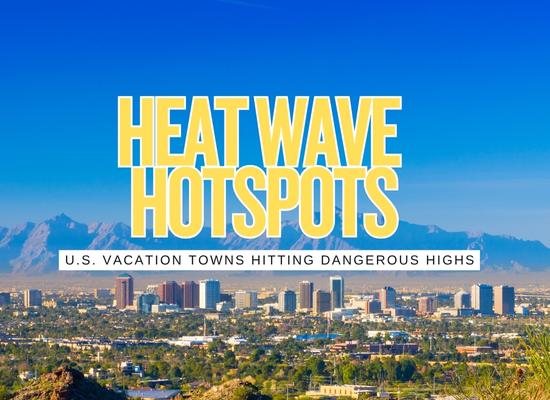
If your idea of a summer vacation doesn’t involve melting flip-flops, sunburns before lunch, or heatstroke warnings on your weather app, you might want to skip these spots. In 2025, record-setting heat waves and prolonged droughts are turning some U.S. destinations into full-on furnaces. While they may have charm, history, or beach access, the scorching temps this summer are making these places tough for families looking for fun and comfort.
1️⃣ Phoenix, Arizona
Phoenix isn’t just hot — it’s extreme. In June alone, the city saw 17 days over 110°F, with overnight lows barely dipping below 90. That makes outdoor plans nearly impossible unless they start at sunrise.
- Why to Avoid: Heat warnings are now routine, and most midday outdoor attractions are either closed or downright dangerous for kids and pets.
- What Locals Are Doing: Staying indoors, cranking the AC, and rushing from one air-conditioned space to another.
- Better Option Nearby: Head north to Flagstaff or Sedona — still warm, but much more manageable.
2️⃣ Las Vegas, Nevada
Las Vegas heat in 2025 is no joke. The combination of blacktop, neon, and desert air can make it feel like you’re walking through a blow dryer — especially with heat indexes topping 115°F.
- Why to Avoid: Family-friendly pool time is limited to the early morning. Outdoor attractions like the Strip, fountains, and tours lose their appeal once the pavement starts to sizzle.
- Hidden Issue: Dehydration hits fast in this dry climate, and it’s not uncommon for visitors to underestimate how quickly they’ll feel it.
- Better Option Nearby: Consider Lake Tahoe for mountain air and plenty of kid-friendly activities.
3️⃣ Dallas, Texas
Dallas is no stranger to heat, but this summer has brought oppressive humidity that turns 100°F days into 110°F heat index warnings. Factor in ozone alerts and you’re basically stuck indoors.
- Why to Avoid: The air feels thick, and daily air quality alerts are making it harder for families to plan safe outdoor fun.
- Surprise Factor: Many playgrounds are now recommending limited use during afternoon hours due to surface burn risks.
- Better Option Nearby: Try the Texas Hill Country or even coastal spots like Galveston, where the Gulf breeze makes a difference.
4️⃣ Palm Springs, California
Palm Springs is stylish, scenic, and sizzling. By July, daytime highs routinely hit 115°F, and even the famed resort pools feel more like hot tubs than relief.
- Why to Avoid: Outdoor activities like golf, hiking, and sightseeing become nearly impossible past mid-morning. Even shaded areas offer little escape.
- Unexpected Downside: Many kid-friendly attractions close early or reduce hours to protect staff and guests from the heat.
- Better Option Nearby: Head west to the California coast — places like Santa Barbara or San Luis Obispo offer cooler temps and a breezy break.
5️⃣ New Orleans, Louisiana
New Orleans has the charm, but this summer it also has unbearable humidity. With heat indexes soaring past 110°F and thunderstorms steaming things up even more, it’s a sweaty challenge.
- Why to Avoid: Walking tours and outdoor festivals are tough to enjoy when it feels like you’re wrapped in a wet blanket.
- Health Risk: The mix of heat and poor air quality is a concern, especially for kids, the elderly, and anyone with asthma.
- Better Option Nearby: Consider heading to the Florida Panhandle, where breezes and shaded beaches offer more relief.
6️⃣ Death Valley, California/Nevada Border
As the hottest place on Earth, Death Valley is living up to its name this year. Temperatures are approaching 130°F, making it a cool spot only for memes — not for families.
- Why to Avoid: Even car dashboards and steering wheels are burning hazards. Outdoor exploring is basically off-limits unless you’re up before sunrise.
- Reality Check: Park rangers are advising tourists to avoid daytime visits altogether due to heat illness risk.
- Better Option Nearby: Escape to higher elevations like Mammoth Lakes or Yosemite for mountain air and family-friendly hikes.
7️⃣ Tucson, Arizona
Tucson shares much of Phoenix’s summer misery — dry, blazing afternoons with relentless sun and little relief after dark. This year, multiple excessive heat warnings have already been issued by mid-June.
- Why to Avoid: Even desert museums and outdoor family attractions limit hours due to heat dangers.
- Hidden Risk: Playground equipment and hiking trails become burn hazards, and local ERs are seeing a rise in heat exhaustion cases.
- Better Option Nearby: Head to the mountains — Mount Lemmon just outside of Tucson offers cooler temps and shaded nature trails.
8️⃣ Bakersfield, California
Bakersfield isn’t usually top of mind for travelers, but if you’re road-tripping through California this summer, you may want to reroute. The San Joaquin Valley is baking under oppressive heat and poor air quality.
- Why to Avoid: Triple-digit temps combined with high ozone levels are triggering air quality alerts almost daily.
- Family Challenge: Not much to do outside — even splash pads and water parks are shutting down during the hottest hours.
- Better Option Nearby: Explore the cooler Central Coast towns like Morro Bay or Pismo Beach.
9️⃣ Oklahoma City, Oklahoma
OKC is heating up faster than expected this summer. Heatwaves and humidity have made outdoor fun feel more like a survival challenge.
- Why to Avoid: Midday feels like 105°F or higher, and even shaded parks aren’t cutting it.
- Surprising Issue: Locals are reporting that tires are bursting more frequently and pavement is buckling.
- Better Option Nearby: Try Arkansas’s Ozarks region for scenic, family-friendly lakes and forests.
🔟 El Paso, Texas
El Paso is dry and beautiful — but this summer, it’s brutal. Day after day above 105°F with zero cloud cover is making it hard to recommend for a family trip.
- Why to Avoid: Many hotels and attractions are struggling to keep outdoor areas usable during peak hours.
- Travel Tip: Even the zoo has limited hours due to heat safety for animals and visitors.
- Better Option Nearby: Take a trip to Northern New Mexico — places like Taos and Santa Fe offer culture and cool mountain air.
| Heatmap – Hottest U.S. Vacation Spots to Avoid (2025) | ||
| Location | Heat Pattern | Risk Level |
|---|---|---|
| Phoenix, AZ | 17+ days over 110°F in June | 🟥 Extreme |
| Las Vegas, NV | Multiple days at 115°F+ with dry heat | 🟧 Very High |
| Dallas, TX | Heat index regularly above 110°F | 🟧 Very High |
| Palm Springs, CA | Daily highs around 115°F | 🟨 High |
| New Orleans, LA | Extreme humidity, frequent 100°F heat index | 🟨 High |
| Death Valley, CA/NV | Peaking near 130°F | 🟥 Extreme |
| Tucson, AZ | Mid-100s with overnight heat | 🟧 Very High |
| Bakersfield, CA | Triple digits with poor air quality | 🟨 High |
| Oklahoma City, OK | Humidity and pavement-buckling heat | 🟩 Moderate |
| El Paso, TX | Dry heat exceeding 105°F regularly | 🟩 Moderate |
Choosing the right summer vacation spot isn’t just about scenery — it’s about safety, comfort, and making great memories. With extreme heat blanketing much of the U.S. in 2025, these hot zones are best avoided if you’re traveling with kids or older adults.
Thankfully, cooler alternatives are just a drive or short flight away. Skip the scorch, and make your summer trip a refreshing one instead of a sweaty struggle.