
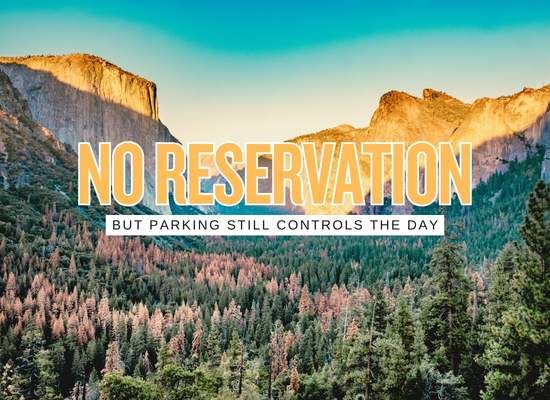
No Reservation Required Does Not Mean No Bottleneck
I would not plan a 2026 national park trip around the phrase “no reservation required” without also checking the parking, shuttle and backup-route situation for the exact area the family wants to visit.
The biggest family mistake is assuming the gate is the problem. In many parks, the real problem starts after the gate: the visitor center lot is full, the shuttle line is long, the famous trailhead is blocked, the scenic road is temporarily restricted or the kids now have a longer walk than anyone planned.
Family travel shortcut: in 2026, the best no-reservation park plan is not “arrive whenever.” It is “arrive before the parking wave, know the shuttle rule, choose one anchor area, carry food and water, and have a second plan that does not depend on the same crowded lot.”
The 2026 Access Shift Families Need to Understand
Timed-entry and vehicle-reservation systems made trip planning frustrating, but they also made the crowd problem visible before families arrived. When those systems are removed, the pressure often becomes less predictable. Parks can still manage crowding with entrance diversions, full-lot closures, shuttle-only corridors, parking time limits, traffic control, road restrictions and temporary access holds.
The lot becomes the new reservation
If the family cannot park near the trail, overlook or shuttle hub, the lack of timed entry does not help much.
The bus can be the gate
Some no-reservation parks still require families to use shuttles for the most popular corridor or make shuttles the smartest option.
Overflow parking adds miles
A family with toddlers, grandparents or tired kids needs to know whether backup parking turns into a long hot walk.
Early and late beat the rush
Many parks are easiest before the mid-morning surge or after late-afternoon turnover, even without a reservation rule.
10 National Park Bottlenecks Families Need to Know in 2026
This ranking is not about which park is prettiest. It ranks the practical bottleneck families are most likely to feel: parking risk, shuttle dependency, walking burden, best arrival window and the backup plan that saves the day.
Yosemite Valley
Yosemite National Park, California
Yosemite is the biggest 2026 no-reservation warning sign for families. The park no longer requires a vehicle reservation, but Yosemite Valley still has the same basic physical problem: too many people want the same roads, lots, viewpoints, waterfalls and trailheads during the same hours.
- Parking risk: extreme from mid-morning through late afternoon, especially in Yosemite Valley.
- Shuttle dependency: high once parked, because moving the car can restart the parking problem.
- Family walking burden: high if families park far from their target or need to move between shuttle stops, food, bathrooms and trails.
- Best arrival window: before 8 a.m. is safest, with before 9 a.m. a practical cutoff for many Valley day visitors.
- Backup plan: park in a gateway community and use YARTS, or shift the day to Mariposa Grove, Wawona, Hetch Hetchy or a less crowded Valley walking loop.
Logan Pass
Glacier National Park, Montana
Glacier dropped vehicle reservations park-wide in 2026, but Logan Pass did not become casual. It became more targeted. The key family bottleneck is now a three-hour private-vehicle parking limit during the peak summer period plus a ticketed shuttle for longer, more predictable access.
- Parking risk: extreme at Logan Pass in peak summer.
- Shuttle dependency: high if the family does not want to gamble on a very early parking attempt.
- Family walking burden: medium to high because shuttle timing, alpine weather, bathroom needs and trail choices all stack together.
- Best arrival window: very early for private vehicle parking, or use a planned shuttle ticket strategy.
- Backup plan: Many Glacier, Two Medicine, Lake McDonald, North Fork or a lower-pressure Going-to-the-Sun Road segment.
Arches Entrance Road and Devils Garden Corridor
Arches National Park, Utah
Arches is one of the clearest examples of the new 2026 tradeoff. Families do not need an advance timed-entry reservation, but NPS warns that vehicles may be diverted from park entrances when areas become too congested. The problem is simple: a small park road network, famous stops, limited lots and a lot of visitors arriving after breakfast in Moab.
- Parking risk: very high at Windows, Delicate Arch, Devils Garden and other popular stops.
- Shuttle dependency: low because there is no general park shuttle, which means the car is both freedom and bottleneck.
- Family walking burden: medium to high in heat, especially if the family has to skip full lots and backtrack.
- Best arrival window: before 8 a.m. or after 3 p.m.
- Backup plan: split Arches into sunrise and late-day sessions, then use Moab downtime, Canyonlands, Dead Horse Point or a shaded hotel/pool break midday.
Zion Canyon Visitor Center and Shuttle Line
Zion National Park, Utah
Zion does not need a reservation or ticket for the shuttle, but the shuttle is still the key family bottleneck. Parking inside the park fills early, and if the family misses that window, the backup often becomes Springdale parking plus a walk or town shuttle to the pedestrian entrance.
- Parking risk: very high at the Visitor Center and canyon access points.
- Shuttle dependency: extreme for Zion Canyon during shuttle season.
- Family walking burden: high if parking shifts to Springdale, especially with strollers, heat, water bottles and tired kids.
- Best arrival window: before 8 a.m., earlier on holiday and peak-season days.
- Backup plan: park in Springdale, ride the town shuttle, use Pa’rus Trail, Watchman area, Kolob Canyons or east-side scenic stops if canyon logistics are too crowded.
Paradise and Sunrise
Mount Rainier National Park, Washington
Mount Rainier will not use timed entry in 2026, but the park says it will use parking management strategies. For families, the practical issue is that Paradise and Sunrise are still the magnet areas, and a late arrival can turn a mountain day into a long drive with no easy place to stop.
- Parking risk: high at Paradise and Sunrise during peak summer days.
- Shuttle dependency: low to medium depending on outside transportation options, but families should not count on easy in-park alternatives.
- Family walking burden: medium to high because trail choices, snow patches, weather changes and restroom logistics can be harder with kids.
- Best arrival window: before 7 a.m. or after 4 p.m.
- Backup plan: choose one main area and one alternate, such as Longmire, Ohanapecosh, Grove of the Patriarchs area when open, or lower-elevation viewpoints and picnic stops.
Jenny Lake
Grand Teton National Park, Wyoming
Grand Teton does not require an entrance reservation, but Jenny Lake can behave like a reservation-only stop if the family arrives after the lot fills. The area is popular because it combines mountain views, boat shuttle access, Hidden Falls, Inspiration Point and classic Teton scenery in one easy-to-understand place.
- Parking risk: very high in summer.
- Shuttle dependency: medium, because the paid Jenny Lake boat shuttle can reduce walking but adds its own timing and cost.
- Family walking burden: medium if using the boat, high if skipping it and walking the full route.
- Best arrival window: before 8 a.m. for the cleanest family parking odds.
- Backup plan: String Lake, Leigh Lake, Menors Ferry, Colter Bay, Signal Mountain or a scenic pullout and picnic day away from the main Jenny Lake crush.
Hoh Rain Forest and Hurricane Ridge
Olympic National Park, Washington
Olympic does not require entrance reservations, but the park is spread across a huge peninsula and has several very concentrated family bottlenecks. NPS says Hurricane Ridge and Hoh Rain Forest parking lots can fill completely in summer, especially on weekends and holidays, with vehicles stopped at entrance stations when no parking is available.
- Parking risk: high to very high at Hoh Rain Forest and Hurricane Ridge.
- Shuttle dependency: low, which means families mostly solve the problem by timing, route choice and patience.
- Family walking burden: medium, but the driving burden can be high because Olympic attractions are far apart.
- Best arrival window: before 10 a.m. or after 5 p.m., and after 6 p.m. during holidays for some high-demand areas.
- Backup plan: Lake Crescent, Sol Duc, Rialto Beach, Ruby Beach, coastal stops, Port Angeles activities or a different rainforest time block.
Cades Cove, Laurel Falls and Popular Trailheads
Great Smoky Mountains National Park, Tennessee and North Carolina
The Smokies have no entrance fee and no timed-entry system, which makes the park feel easy on paper. The catch is parking. A parking tag is required for vehicles parked longer than 15 minutes, but that tag does not guarantee a spot. The busiest family areas can still feel full even when the park itself is wide open.
- Parking risk: high at Cades Cove, Laurel Falls access, Newfound Gap, Clingmans Dome area and popular trailheads.
- Shuttle dependency: low inside the park, which means families need their own backup routes.
- Family walking burden: medium to high if the family parks far from the intended stop or chooses a crowded trail.
- Best arrival window: early morning, weekdays or late afternoon for the most popular stops.
- Backup plan: Foothills Parkway, Greenbrier, Deep Creek, Tremont, less crowded picnic areas, Gatlinburg indoor stops or a cabin reset.
Old Faithful, Canyon and Wildlife Jams
Yellowstone National Park, Wyoming, Montana and Idaho
Yellowstone requires no vehicle reservation, but it is a different kind of family bottleneck. It is enormous, weather can change quickly, wildlife can stop traffic, and the famous places draw heavy midday demand. The family may not be fighting one parking lot as much as a chain of delays across a huge loop.
- Parking risk: medium to high at Old Faithful, Grand Canyon of the Yellowstone, geyser basins and wildlife pullouts.
- Shuttle dependency: low, because most families rely on their own vehicle.
- Family walking burden: medium, but the sitting-in-car burden can be high.
- Best arrival window: before 7 a.m. or after noon for park entrances, and avoid main attractions from 10 a.m. to 4 p.m. when possible.
- Backup plan: split the park by zones: one geyser day, one canyon day, one wildlife corridor day and one lighter scenic-drive day.
South Rim Visitor Center, Village and Viewpoint Lots
Grand Canyon National Park, Arizona
Grand Canyon has no timed entry, and the South Rim is one of the better big-park layouts for families because shuttle buses can move people between major areas. But the parking and shuttle plan still matters. Families who try to drive to every viewpoint can turn an easy rim day into a frustrating stop-and-hunt parking loop.
- Parking risk: medium to high at the South Rim Visitor Center and Village during peak times.
- Shuttle dependency: medium to high if the family wants a smoother day.
- Family walking burden: medium because rim paths, shuttle stops and overlooks can add up quickly.
- Best arrival window: early morning for parking, then use shuttles and walking paths.
- Backup plan: park once at the Visitor Center Plaza, use shuttle routes, consider Desert View Drive timing or build the day around one rim section.
2026 Family Bottleneck Ranking Table
The table below ranks each park bottleneck by the five issues that matter most to families: parking risk, shuttle dependency, walking burden, best arrival window and backup plan.
| Rank | Bottleneck | Parking risk | Shuttle dependency | Family walking burden | Best arrival window | Backup plan |
|---|---|---|---|---|---|---|
| 01 | Yosemite Valley | Extreme | High after parking | High | Before 8 a.m., before 9 a.m. at latest | YARTS, park once, Mariposa Grove, Wawona, Hetch Hetchy |
| 02 | Glacier Logan Pass | Extreme | High if not driving early | Medium to high | Very early, or use ticketed shuttle strategy | Many Glacier, Two Medicine, Lake McDonald, North Fork |
| 03 | Arches main corridor | Very high | Low | Medium to high in heat | Before 8 a.m. or after 3 p.m. | Split day, Moab break, Canyonlands, Dead Horse Point |
| 04 | Zion Canyon shuttle hub | Very high | Extreme | High if parking in Springdale | Before 8 a.m., earlier on peak days | Springdale shuttle, Pa’rus Trail, Kolob Canyons, east side |
| 05 | Mount Rainier Paradise and Sunrise | High | Low to medium | Medium to high | Before 7 a.m. or after 4 p.m. | Longmire, Ohanapecosh, lower viewpoints, picnic areas |
| 06 | Grand Teton Jenny Lake | Very high | Medium by boat shuttle | Medium to high | Before 8 a.m. | String Lake, Leigh Lake, Colter Bay, Signal Mountain |
| 07 | Olympic Hoh and Hurricane Ridge | High | Low | Medium, plus heavy drive time | Before 10 a.m. or after 5 p.m. | Lake Crescent, Sol Duc, coast, Port Angeles, Ruby Beach timing |
| 08 | Great Smoky Mountains popular lots | High | Low | Medium to high | Early morning, weekdays, late afternoon | Foothills Parkway, Greenbrier, Deep Creek, Tremont |
| 09 | Yellowstone main attractions and wildlife jams | Medium to high | Low | Medium, plus long car time | Enter before 7 a.m. or after noon | Zone-based days, skip peak 10 a.m. to 4 p.m. areas |
| 10 | Grand Canyon South Rim | Medium to high | Medium to high | Medium | Early morning, then park once | Visitor Center Plaza, shuttles, Desert View Drive, one rim zone |
National Park Bottleneck Planner
Use this tool to estimate whether your no-reservation park day is likely to feel easy, crowded or risky based on arrival time, family size, shuttle needs and backup strength.
Your national park bottleneck read
A custom recommendation will appear here.
Parent read
Best moves
The Backup Plan Table Parents Actually Need
A good backup is not “try the same crowded place later.” A good backup shifts the family to a different pressure zone, a different elevation, a different gateway or a different kind of activity.
| Park | Failed first plan | Better backup | Reason it works | Family caution |
|---|---|---|---|---|
| Yosemite | Yosemite Valley parking is full | YARTS, Mariposa Grove, Wawona, Hetch Hetchy or a late Valley return | Moves the family away from the same overloaded Valley lots | Do not keep circling. It burns time and patience. |
| Glacier | Logan Pass is full or time-limited | Ticketed shuttle, Many Glacier, Two Medicine or Lake McDonald | Reduces dependence on one alpine lot | Shuttle tickets and child seats need planning. |
| Arches | Entrance diversion or full trailhead lots | Moab break, Canyonlands, Dead Horse Point or late-day Arches return | Heat and crowd pressure often ease later | Midday desert heat can be hard on kids. |
| Zion | Visitor Center parking is full | Springdale parking and shuttle, Pa’rus Trail, Kolob Canyons or east side | Keeps the day moving without waiting for one space | Springdale backup can add walking and time. |
| Mount Rainier | Paradise or Sunrise access is constrained | Longmire, Ohanapecosh, lower-elevation trails or scenic picnic stops | Different areas can still deliver mountain scenery | Weather changes quickly, bring layers. |
| Grand Teton | Jenny Lake lot is full | String Lake, Leigh Lake, Signal Mountain, Colter Bay or Menors Ferry | Grand Teton has many scenic family stops close together | Boat shuttle timing can change the walking burden. |
| Olympic | Hoh or Hurricane Ridge is full | Lake Crescent, Sol Duc, coastal beaches, Port Angeles or a later return | Olympic has multiple ecosystems, not one main gate | Drive time between areas is easy to underestimate. |
| Smokies | Cades Cove or Laurel Falls parking is packed | Foothills Parkway, Greenbrier, Deep Creek, Tremont or a town/cabin reset | Shifts to less concentrated areas | Parking tag still required for stops over 15 minutes. |
| Yellowstone | Old Faithful or Canyon area is jammed | Zone-based reroute, secondary geyser basin, picnic area or later return | Works better than crossing the whole park chasing one stop | Wildlife jams can break any schedule. |
| Grand Canyon | Visitor Center or Village parking is crowded | Park once, use shuttle routes, shift to Desert View Drive or one rim zone | Shuttles reduce repeated parking searches | Rim walking adds up with small kids. |
Family Difficulty Meter
The hardest parks are not always the parks with the toughest hikes. They are the parks where parking, shuttle access and family pacing collide.
Best Arrival Windows by Park Type
Arrival timing is the closest thing families have to a free reservation. The right window can make a no-reservation park feel manageable. The wrong window can make the day feel broken before the first trail starts.
| Park type | Best first move | Danger window | Late-day option | Family note |
|---|---|---|---|---|
| Small road network with famous stops | Enter very early and hit the farthest or most famous lot first | 9 a.m. to 2 p.m. | Return after 3 p.m. or 4 p.m. | Arches is the clearest example. |
| One famous valley or core area | Arrive early, park once and stop moving the car | Mid-morning to late afternoon | Evening walks and shuttle loops | Yosemite Valley punishes repeated parking attempts. |
| Shuttle-first canyon | Park before the Visitor Center fills | Late morning shuttle surge | Springdale strategy or quieter trails | Zion requires a shuttle mindset even without a shuttle ticket. |
| Alpine pass or high mountain lot | Arrive before sunrise-level crowds or use the official shuttle plan | Midday alpine parking hunt | Lower-elevation backup | Glacier and Rainier need a Plan B before the road climbs. |
| Huge drive-loop park | Enter early and choose one zone | 10 a.m. to 4 p.m. at headline attractions | Stay in one region and let traffic clear | Yellowstone is won by restraint, not by driving more. |
No-Reservation Family Checklist
- 🅿️ Treat parking like a limited attraction: no timed entry does not create more spaces at Yosemite Valley, Logan Pass, Jenny Lake or Zion Visitor Center.
- 🌅 Start earlier than feels normal: the difference between 7:15 a.m. and 10:15 a.m. can decide the whole day.
- 🚌 Know the shuttle rule before leaving the hotel: some shuttles need tickets, some are free, some are essential and some are just helpful.
- 🥪 Carry food before the bottleneck: snacks and lunch matter when the family is stuck in traffic, a shuttle line or a full-lot detour.
- 🚻 Use bathrooms before the famous corridor: kids do not care that the lot is full or the shuttle line is slow.
- 👟 Check the walking burden: overflow parking can quietly add a mile or more to a family day.
- 📲 Watch official alerts: temporary diversions, road work, fire restrictions, weather, construction and shuttle changes can alter the plan quickly.
- 🧭 Build a real Plan B: choose an alternate area outside the same bottleneck, not just a second crowded lot.
- 🚗 Park once when possible: at Yosemite, Grand Canyon and Zion, moving the car can be the start of the next problem.
- 🕓 Use late afternoons: families who miss the early window can often salvage the day by returning after peak parking pressure eases.
National parks dropping broad reservation systems in 2026 is good news for families who hate planning around timed-entry lotteries. But it does not erase capacity limits. Yosemite, Glacier, Arches and Mount Rainier show the new pattern clearly: access is easier on paper, but parking, shuttles, arrival timing and temporary management still decide the real trip. The families who win 2026 park travel will not be the ones who simply show up. They will be the ones who arrive early, park once, pack food, know the shuttle rule and have a backup that does not depend on the same crowded road.
