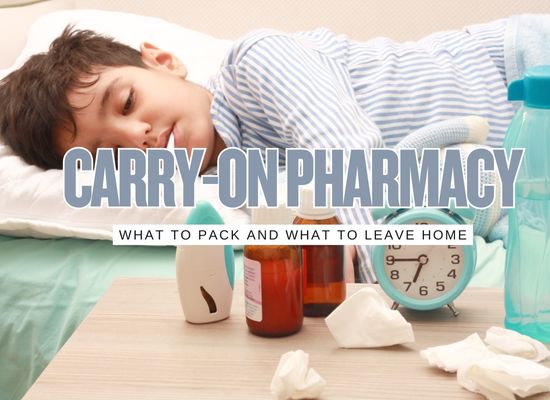
Most parents pack medicine like they are moving a small clinic through the airport. The problem is that every bottle, tube and “just in case” spray has to be carried, dug through and repacked on repeat. The goal is not to bring everything. The goal is to bring the small set of things that makes you calm and actually gets used when a kid spikes a fever, gets queasy or wakes up itchy at 2 a.m. on a layover. The rest can usually stay in checked bags or on the pharmacy shelf at home.
You are aiming for a small, clear pouch that can handle the most likely problems until you reach a hotel, a real pharmacy or a clinic. Think fever, headache, upset stomach, motion sickness, small scrapes and mild rashes.
Every family is different and some kids have specific medical needs. Use this as a conversation starter with your child’s doctor, not a prescription list.
Most countries limit liquids in carry-ons to small containers inside a clear bag, but medicine has extra allowances. Check current rules for your route, and when in doubt bring documentation and allow extra time at security.
- Place small liquid medicines and gels in a clear, resealable bag.
- Keep them separate from general toiletries so you can present them if asked.
- For larger medically necessary liquids, follow airline and security guidance and carry a note or prescription label.
- Keep prescription labels visible. Avoid unlabeled mystery pills in plastic bags.
- Carry a simple medication list with names, doses and timing.
- For complex needs, ask your doctor for a brief travel letter summarizing key medicines.
- Keep the pharmacy pouch under the seat, not in the overhead bin.
- Place a small flashlight or phone light app nearby for night flights.
- Tell at least one other adult what is inside and where dosing charts are kept.
Use this to think through how many single doses you might need for one medicine. Always follow your doctor’s dosing advice, not this calculator, for actual medical decisions.
Many items feel like safety but almost never leave the pouch. For most families they do not have to live in the carry-on.
- Large ice packs that must be frozen. Many hotels can provide ice when you arrive.
- Multiple full size bug sprays when your first stop is a city hotel.
- Bulky braces and wraps for joints unless someone is currently recovering and needs one.
- More than one thermometer or devices you have never actually used before.
- Big stacks of single use masks that you could just as easily keep in a separate pocket bag.
If an item is mainly for a situation where you would seek professional medical care anyway, it can often live in checked luggage or be skipped entirely.
Use these as starting points and adjust for your own family, prescriptions and doctor advice.
- Age appropriate fever and pain medicine with clear dosing tool.
- Written dosing chart from pediatrician or clinic if available.
- Thermometer you know how to use quickly.
- Oral rehydration drink mix or electrolyte powder.
- Small rash or itch cream if your doctor says it is suitable.
- Bandage strip mix and a few antiseptic wipes.
- Prescriptions such as inhalers or allergy pens carried on your person.
- Pain and fever relief suitable for both adults and older kids, or clearly separated by age.
- Motion sickness option you have tried at home if recommended by your doctor.
- Antacid or anti gas tablets for adults.
- Simple sleep hygiene tools like earplugs and eye masks rather than sleep medicine.
- Contact lens backups and eye drops if used.
- Daily prescriptions in original packaging, in carry-on, not checked.
- Enough prescription medicine for the whole trip plus extra days in case of delays.
- Copy of prescriptions or printout from your pharmacy if you need refills on the road.
- Doctor letter describing key conditions and emergency medicines in plain language.
- Small translated card with condition and medicine names for non English speaking destinations if helpful.
For most trips, a small, clearly labeled carry-on pharmacy can calm a lot of parent worry without turning your backpack into a rolling medicine cabinet. The key is to focus on what really happens to your family on travel days, ask your doctor specific questions around those patterns and then pack medicines in forms and sizes that you already know how to use. Everything else can usually live in a larger first aid kit in checked luggage or be left off the packing list until you know you actually need it.